Bridge & Infrastructure Scaffolding Adelaide
Bridge & Infrastructure Scaffolding Adelaide
Underslung and cantilevered scaffold for bridges, footbridges and transport corridors. Waterway isolation and lane closures coordinated. Delivered on Birkenhead Bridge and Flinders Footbridge for head contractors Fulton Hogan and McMahon Services.
Recent work in Adelaide
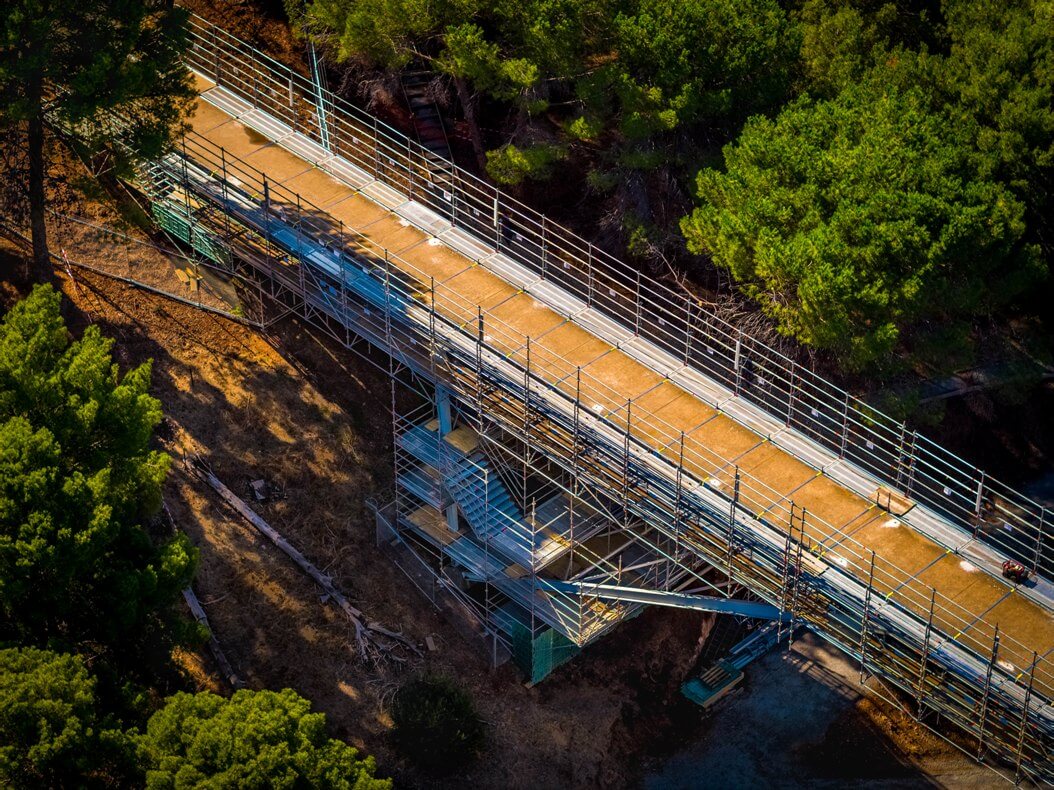

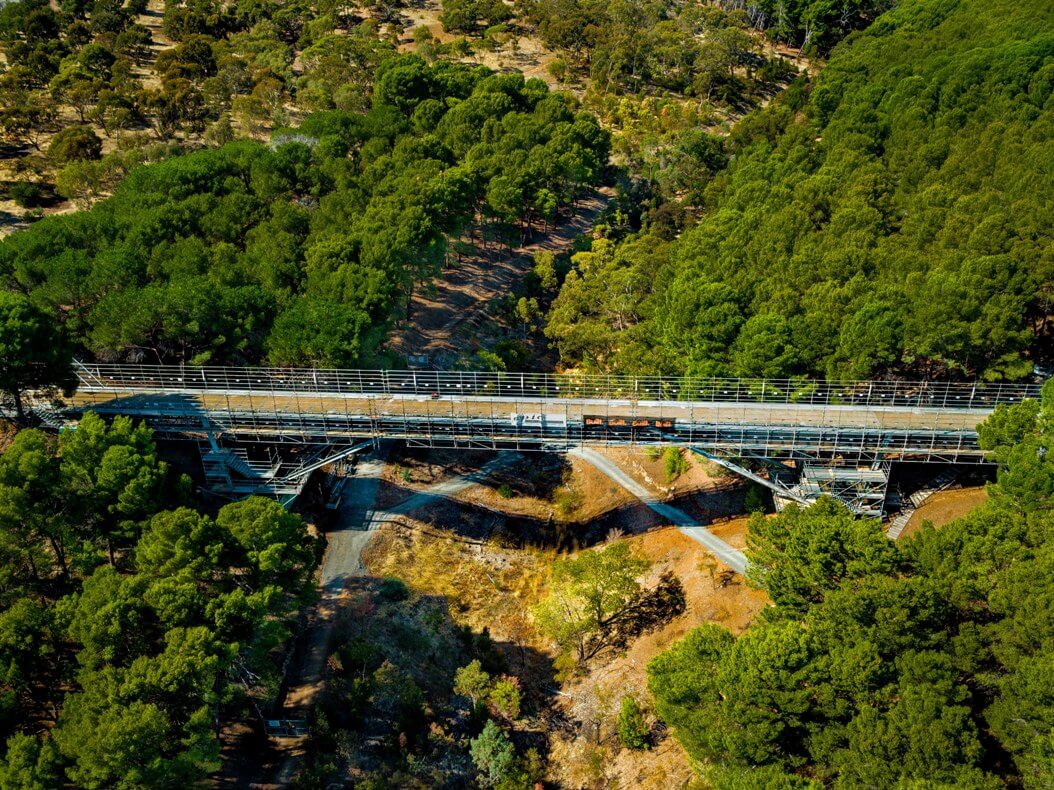
Watch: Epic delivering the Flinders University Footbridge scaffold.
Bridge & Infrastructure Scaffolding in Adelaide
Underslung and cantilevered scaffold for bridges, footbridges, walkways and transport corridors. Waterway isolation, lane closure and pedestrian bypass coordinated with the client’s authorities. Engineered on Proscaf ringlock to AS/NZS 1576. Delivered on Birkenhead Bridge and the Flinders University Footbridge, and for head contractors including Fulton Hogan and McMahon Services.
Get a bridge scaffolding quote or call Epic on 0410 486 750.
When bridge and infrastructure scaffold is required
Bridge access is one of the most technically demanding scaffold categories in the country. The underside of a bridge sits over water, over live traffic, or over occupied pedestrian corridors. There is no ground foundation to build from. The load path has to run back through the bridge itself. And the permits sit across two or three authorities: waterway, road (DIT SA or council), and asset owner (rail, water utility, or defence estate).
We build for that reality. Typical jobs:
- Bridge deck maintenance, resurfacing and re-coating on road and rail bridges
- Footbridge structural repair, painting and lighting install
- Underside access for concrete inspection, spall repair and remedial works
- Walkway and pedestrian corridor refurbishment
- Culvert and elevated structure access over waterways
- Transport corridor works over live traffic
- Rail corridor works under possession windows
- Water and wastewater asset access (treatment plants, weirs, spillways)
If your job needs an engineered underslung scaffold, a cantilevered platform, or coordinated waterway isolation, this is the page.
Prequalification and how Epic delivers on government work
Epic is not Austroads Bridgeworks prequalified and not OFSC accredited. Epic works under prequalified head contractors on DIT SA and Austroads-scoped works, engineered to AS/NZS 1576, BS EN 12810 (system scaffolds), and where propping intersects the bridge, AS/NZS 3610.1:2018. This is how most specialist scaffolders operate on infrastructure work, and it is how the Birkenhead Bridge and Flinders University Footbridge scaffolds were delivered.
Named head contractors: Fulton Hogan and McMahon Services.
Rail: Epic has experience working in rail corridors. RIW tickets are renewed as projects require.
Prequalification and insurance
Bridge and infrastructure buyers filter vendors on prequalification and insurance before they read a single line of copy about capability. The below covers what a DIT SA works engineer, a Tier 1 civil PM, or a rail asset owner needs to see in the tender pack.
- Public and Products Liability: $20M, insurer Sompo Japan Insurance via SURA Liability
- WorkCover Employer: 28107911
- Engineering: designs certified by DC Engineering (CPEng), Professional Indemnity cover held on the design
- Standards conformance: AS/NZS 1576 (scaffolding), AS/NZS 4576 (scaffold guidelines), AS/NZS 3610.1:2018 (where propping intersects), BS EN 12810 (system scaffolds)
- Government work: Epic works for head contractors delivering DIT SA projects and has recently been awarded an SA Water contract. Not OFSC accredited. Not Austroads Bridgeworks prequalified in its own right. Where a scheme is required for a specific project, Epic delivers under the head contractor’s prequalification.
- IPP (SA Industry Participation Plan): Epic is SA-based (Bowden), employs SA labour, and buys SA materials. IPP submissions are handled inside the tender response.
- Crew: 2 to 20 depending on the job. Tickets from labourer through to SA-licensed riggers. Working at heights, EWP and confined space tickets typical. Crew hold DCAC cards and SA Water blue cards. RIW tickets renewed as rail projects require.
- SWMS and compliance documentation: SWMS lodged per mobilisation, monthly documented inspection reports, Certificate of Compliance issued per phase, full compliance pack available for head contractor prequalification.
Named Adelaide infrastructure projects
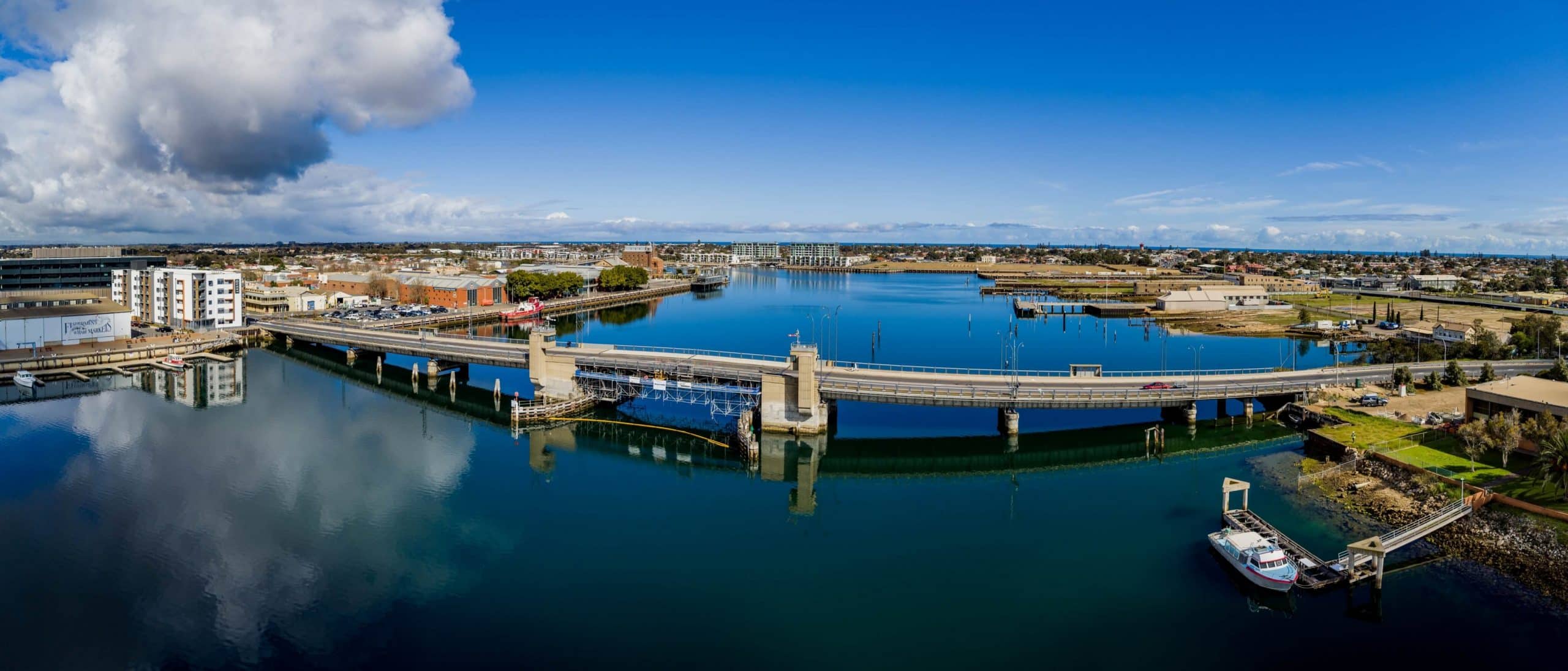
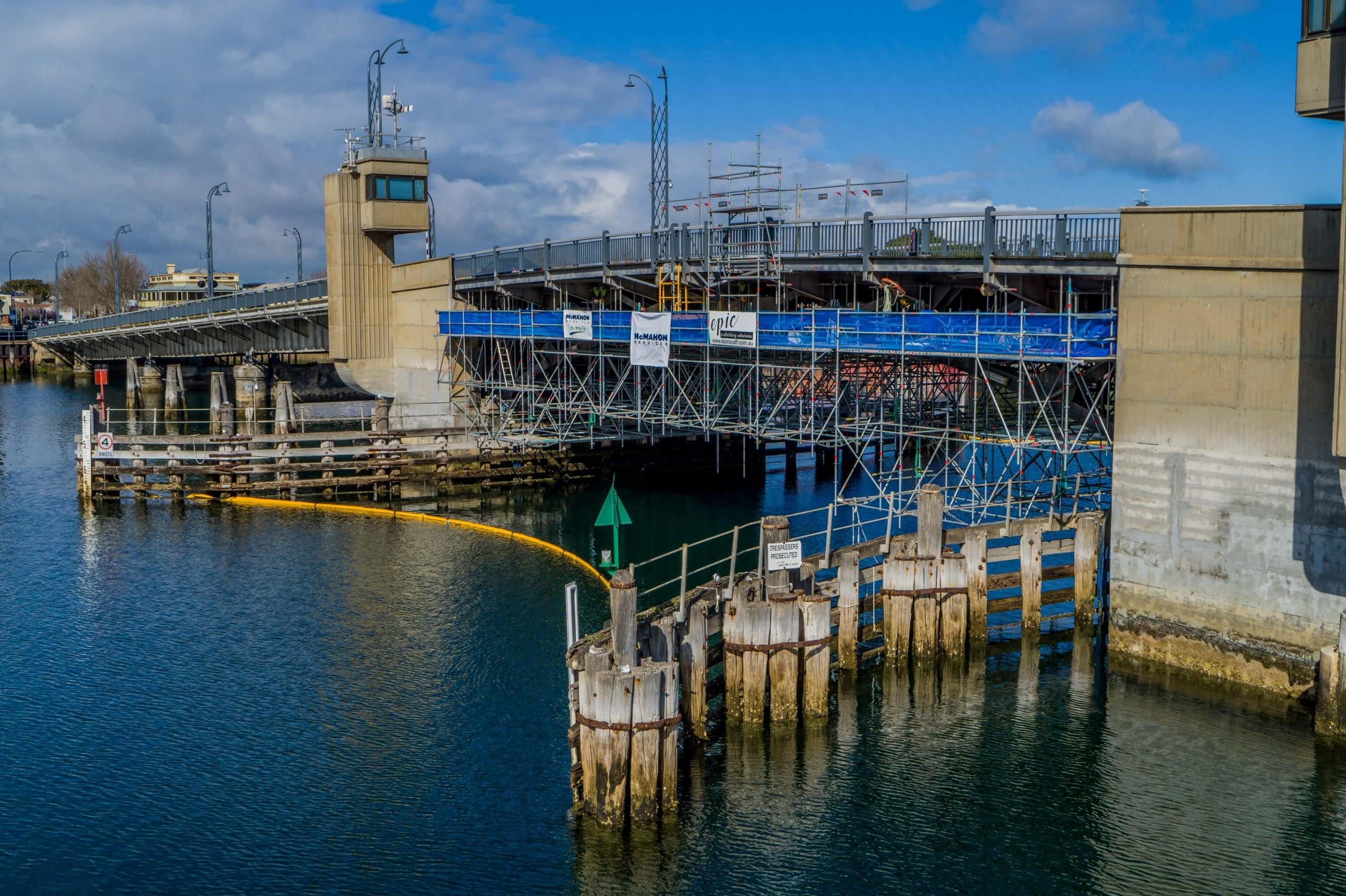
Birkenhead Bridge. Scaffold access delivered over the Port River. Underslung and cantilevered sections engineered against tidal and reaction load conditions.
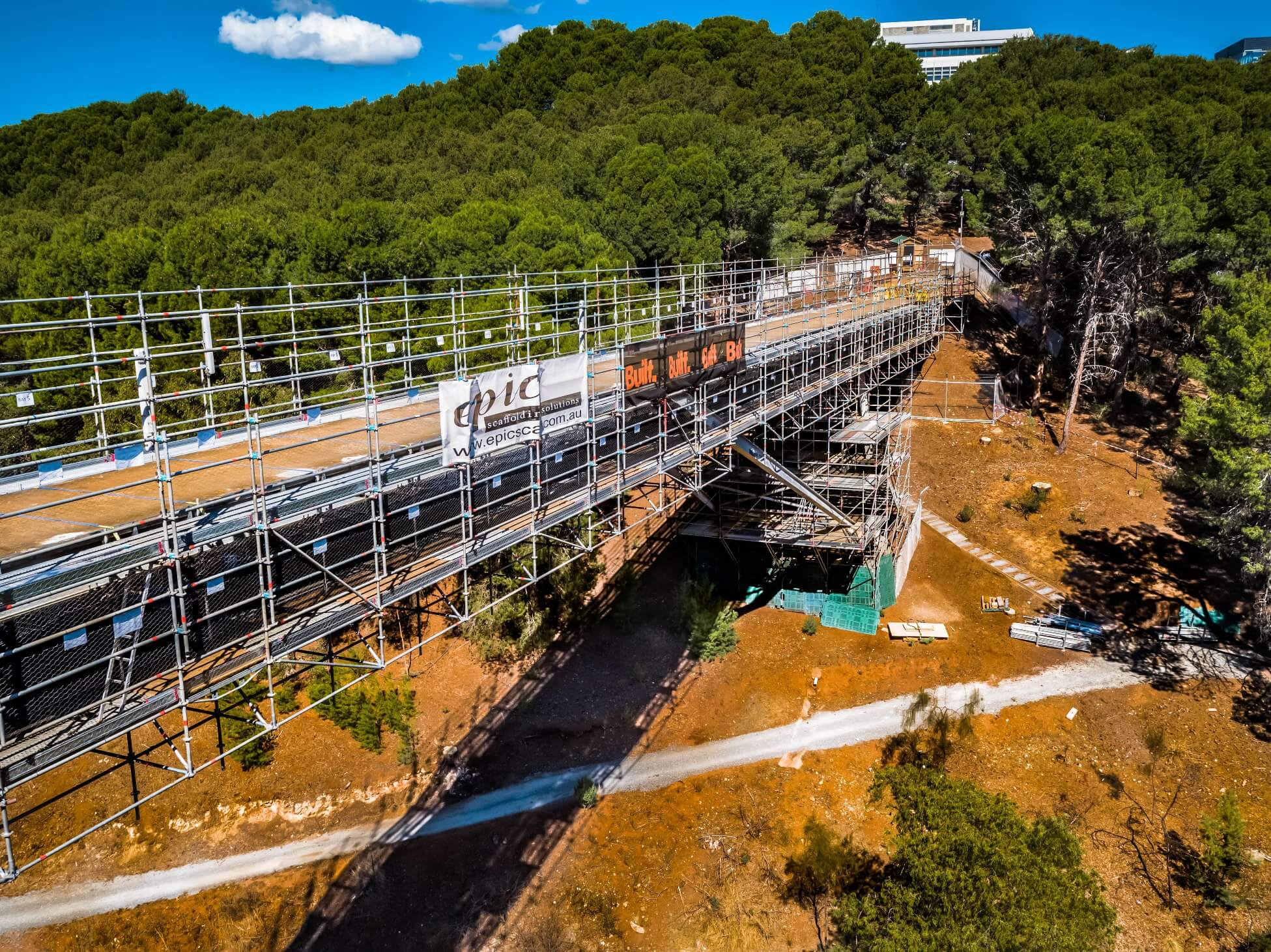
Flinders University Footbridge. Full scaffold engagement over the length of the footbridge, with pedestrian bypass planning built into the drawings before mobilisation. Progress-photographed across every phase of the works.
Head contractors: Fulton Hogan and McMahon Services.
Case study: Birkenhead Bridge, Port Adelaide
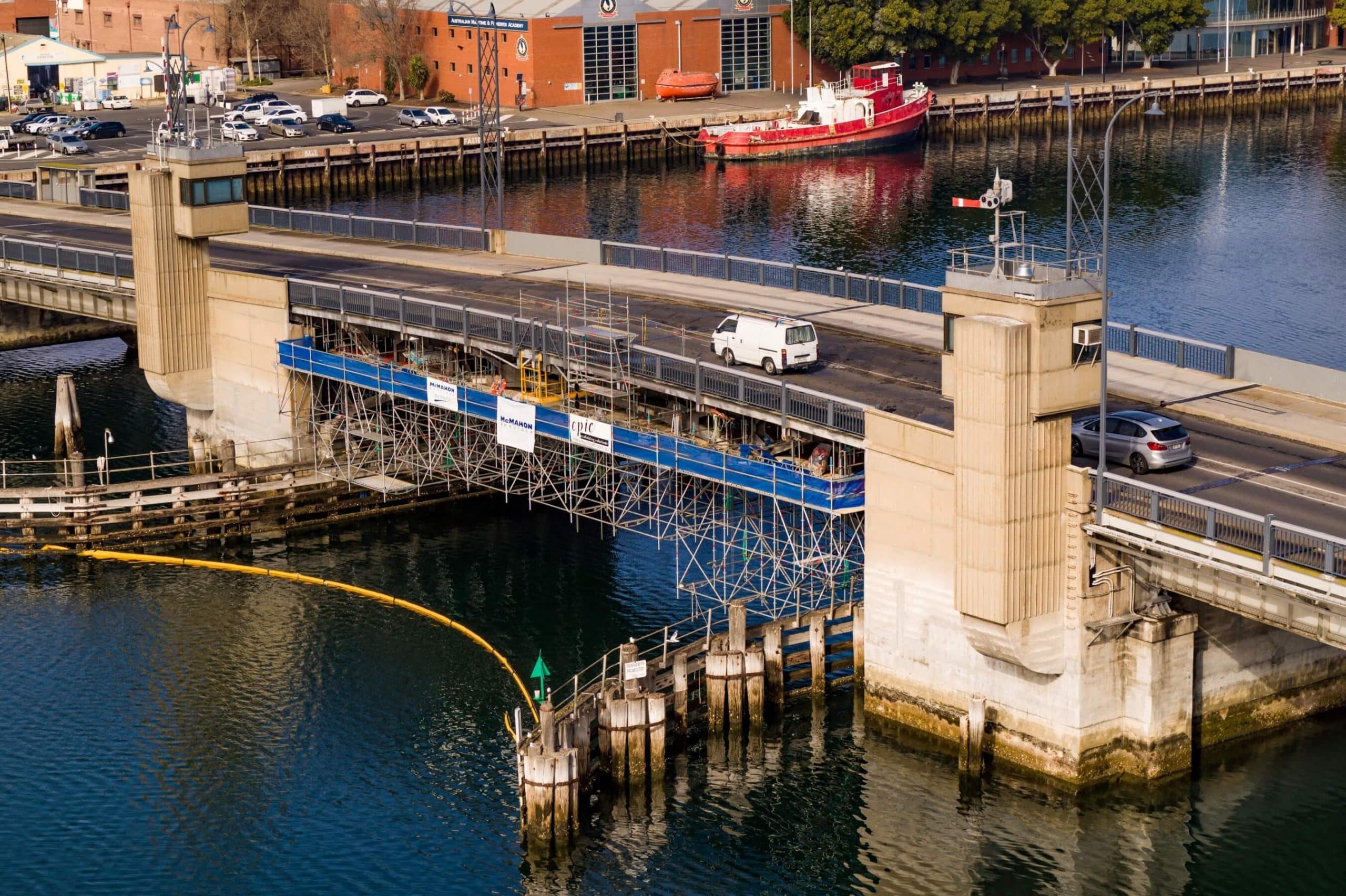
The job: continuous underside access to the Birkenhead Bridge deck for maintenance works over the Port River. The bridge sits above tidal water in an active navigational corridor, with no ground foundation available, install and dismantle windows constrained by tide tables and traffic scheduling, and drop-object containment over water non-negotiable.
The engineered solution. Epic delivered a Proscaf ringlock scaffold hung from the bridge deck via engineered brackets, with load transferred back through the primary steel. Reaction loads were calculated per span and signed off before mobilisation. Underslung sections spanned typical spans of 5.144 metres, with cantilevered sections extending up to 10.288 metres where geometry required, and reaction loads running between 15.2 kN and 32.5 kN on the longer spans. Debris and tool netting were slung below the working platform to contain any dropped object over the water.
Engineered by DC Engineering (CPEng), with the design set to AS/NZS 1576, AS/NZS 4576 and the AS/NZS 1170 series for structural and wind actions. Delivered for head contractors including Fulton Hogan and McMahon Services. Install and dismantle sequenced against the tide tables and the waterway’s navigational constraints from the site visit stage, with the working programme planned around low-water access windows.
Case study: Flinders University Footbridge, Bedford Park
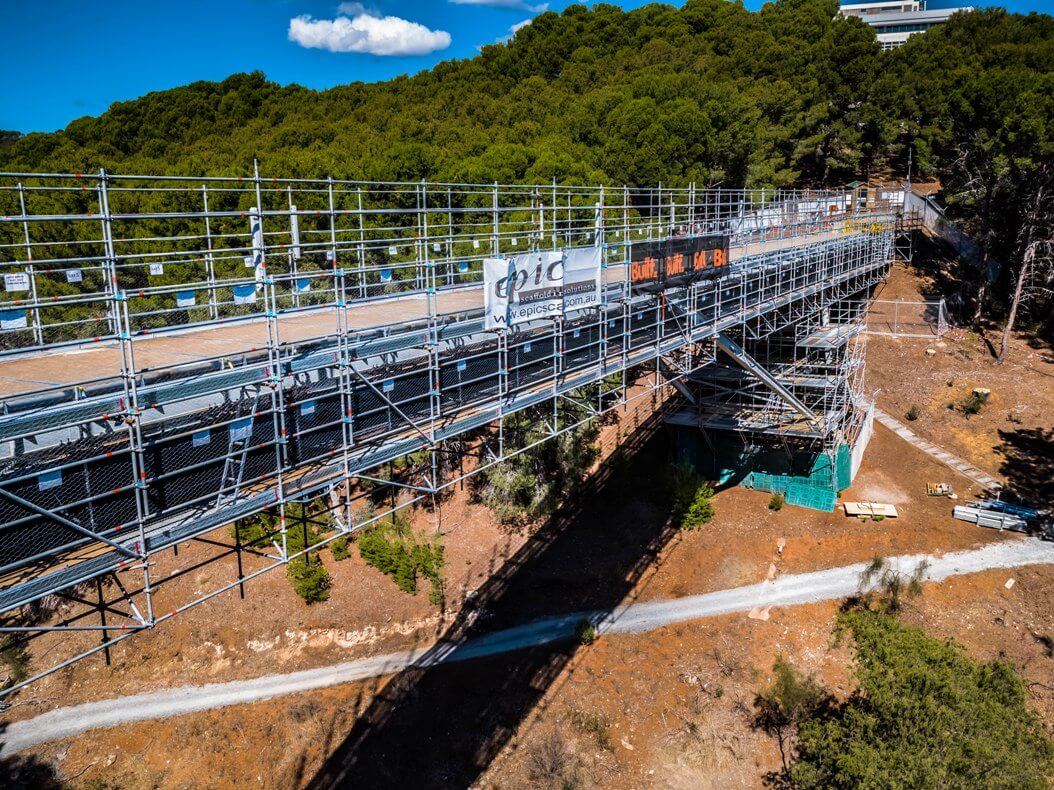
The job: complete structural and coating access to the Flinders University Footbridge across its full span. The footbridge carries daily pedestrian traffic between the university and adjacent precincts, so shutting the corridor for the duration of the works was not an option and the pedestrian bypass had to be built into the scaffold design from day one.
The engineered solution. Epic engineered a full-length Proscaf ringlock scaffold running the entire span of the footbridge, with the pedestrian bypass planned into the drawings before mobilisation. Ply A-Type hoarding at deck level with mesh above kept the public route walkable, DDA-compliant and continuously open through install, use and dismantle. The scaffold provided a continuous working deck for the trades above, with load transfer engineered back through the bridge’s own structural elements.
Engineered by DC Engineering (CPEng), with the design set to AS/NZS 1576 and AS/NZS 4576. Progress-photographed across every phase of the works and captured on time-lapse video, the Flinders Footbridge scaffold is the reference we point to when a head contractor asks how Epic sequences an occupied-corridor bridge scaffold.
Bridge specifications
| Spec | Value |
| System | Proscaf ringlock (steel), engineered underslung or cantilevered per span |
| Standards | AS/NZS 1576, AS/NZS 4576, BS EN 12810, AS/NZS 3610.1:2018 (where propping intersects) |
| Typical bridge span delivered | 5.144m |
| Maximum bridge span engineered | 10.288m |
| Typical reaction load on supporting steel | 15.2 kN |
| Maximum reaction load engineered | 32.5 kN on longer spans |
| Underslung scaffold | Yes, hung from bridge deck or overhead beams via engineered brackets |
| Cantilevered scaffold | Yes, projected from fixed anchor points on the bridge or supporting structure |
| Waterway isolation | Coordinated with the client’s authorities |
| Lane closure coordination | Coordinated with the client’s traffic management provider, or Epic can engage a licensed provider |
| Pedestrian bypass | Planned into scaffold drawings before mobilisation |
| Drop-object containment | Netting under underslung scaffolds where working over water, live traffic, or public corridor |
| Inspection cadence | Monthly documented inspection reports for the duration of hire |
| Certification | Certificate of Compliance at each phase completion |
Engineering and sign-off
Every bridge scaffold Epic delivers is engineered before mobilisation. Reaction loads are calculated per span. Anchor engineering is verified against the actual bridge structure (not template-assumed). Underslung bracket details and cantilever anchor details are drawn and signed by DC Engineering (CPEng) before a single tube goes up. DC Engineering holds Professional Indemnity cover on the design.
Third-party engineering review is available on any complex bridge job. On DIT SA or Austroads-scoped work where third-party review is a procurement condition, we sequence it into the mobilisation programme from day one.
Environmental controls: drop-object protocol
Bridge and infrastructure scaffold work sits over water, over live traffic, or over public pedestrian corridors. A dropped tool, a spall of concrete, or a flake of coating hitting the water or the roadway is a WHS incident and, at the same time, a notifiable environmental event. Epic engineers containment into the scaffold from the drawing stage, not as a bolt-on.
Drop-object protocol (standard on all bridge work):
- Debris and tool netting slung below underslung scaffolds working over water, live traffic, or public corridor
- Tool tethering enforced across crew (lanyards on hand tools working at height above sensitive receivers)
- Perimeter kick boards to AS/NZS 1576 on all working platforms
- Toolbox brief before each shift on drop-object protocol, with sign-off logged
- Incident response plan lodged with the head contractor and (on rail bridges) the possession manager before mobilisation
Environmental containment for coating and remedial works:
- Full encapsulation containment for lead paint removal or concrete spall repair over waterways
- Water quality protection when working over the Port River, Torrens, or other listed waterways (silt curtains, containment sheeting, waste capture)
- Waste stream management coordinated with the head contractor’s environmental officer
Permit process
Bridge scaffold permits sit across three authorities in South Australia. Epic coordinates with the client and their appointed provider.
Waterway isolation. Coordinated with the client’s environmental officer and the relevant asset authority. Timeframes and conditions vary by waterway. The Port River requires different lead time and conditions to an inland creek crossing. SA Water assets carry additional asset-owner conditions.
Lane closure. Road and rail bridge lane closures are coordinated through the client’s licensed traffic management provider, or Epic can engage a licensed provider on the job. The traffic management plan is lodged and approved before mobilisation.
Pedestrian bypass. Where a bridge scaffold sits over a footpath or shared user path, the pedestrian bypass is planned into the scaffold drawings at the start of the job, not bolted on later. Ply A-Type hoarding, shade cloth above, DDA-compliant level access under gantries where required.
Sequencing around possession windows and tidal windows
The two constraints that reshape a bridge scaffold programme are rail possession windows and tidal windows. Both are non-negotiable, both are set by parties outside the head contractor’s control, and both punish vendors who cannot plan install and dismantle around them.
Rail possession windows. On rail bridges, mobilisation and dismantle happen inside the possession window issued by the rail asset owner. Possession windows are typically weekend, overnight, or single-shift blocks. Epic sequences the install so that structural completion (the scaffold safe for the working trades) lands inside a single possession where possible, or across sequential possessions where the scaffold has to be built in stages.
Tidal windows on marine bridges. For scaffold work on tidal bridges (Birkenhead, marine crossings on the Port), install and dismantle are sequenced against low-tide access. High-water conditions constrain what can be craned, what can be barged, and what can be dropped and recovered. Epic plans the tidal window schedule against the tide tables at the site visit stage, before quoting.
Weekend traffic closures. On road bridges over live traffic, install and dismantle typically run under weekend lane closure programmes agreed with the client’s traffic management provider. The scaffold has to be structurally complete by Monday morning traffic peak.
Underslung versus cantilevered
Underslung scaffold hangs from the bridge deck or overhead beams via engineered brackets. We use it when the underside of the bridge needs continuous access and no ground foundation is available. Over water, over rail lines, over live traffic. Load transfer is engineered back through the deck or through the primary steel, with reaction loads calculated per span and signed off before mobilisation.
Cantilevered scaffold projects out from a fixed anchor point on the bridge or the supporting structure. We use it for lane-adjacent access, walkway extensions, or where the underside is not the working face. Anchor engineering is the critical piece. The anchor has to be verified against the actual bridge structure, not assumed from a template.
On most Adelaide bridge jobs we deliver both methodologies on the same scaffold, transitioning between them as the span geometry changes.
Why Epic on bridge and infrastructure
Real waterway experience. Birkenhead Bridge and Flinders University Footbridge are already on the delivery record. We know how to sequence the mobilisation around tidal or seasonal conditions.
Engineered underslung and cantilevered from the same system. Proscaf ringlock lets us switch methodology across a single span without changing kit. That is the difference between a scaffold that fits the bridge and a scaffold that forces the works to fit the scaffold.
Certified engineering. All designs are certified by DC Engineering (CPEng), who hold Professional Indemnity cover on the design.
Drop-object protocol engineered in. Containment nets, encapsulation, silt controls and waste capture are planned at the drawing stage. Your environmental officer gets one point of accountability.
Weather risk sits with us. On quoted works, Epic carries the weather risk. Rain, storm, heat above 37 degrees. The stand-down is priced into the original quote, not added later.
What a bridge scaffold engagement looks like
- Site visit and load path analysis. Reuben or Bryan walks the bridge with your PM. We identify the working face, the load path options, the waterway or traffic condition, the possession or tidal window landscape, and the permit stack.
- Engineered drawings. Elevation drawings, reaction load calculations, underslung or cantilevered methodology, containment and drop-object protocol, and pedestrian bypass planning. All designs certified by DC Engineering (CPEng).
- Coordination with permits. Epic coordinates with the client’s environmental and traffic management providers on waterway, lane closure and pedestrian permits.
- Mobilisation and install. Proscaf ringlock erected to programme, sequenced against possession or tidal windows where relevant. Certificate of Compliance issued at each phase.
- Monthly inspection. Documented inspection cadence for the duration of hire.
- Dismantle. Coordinated to your programme and to the permit and possession windows.
Frequently asked questions
Is Epic Austroads Bridgeworks prequalified?
Is Epic DIT SA prequalified for infrastructure?
Is Epic OFSC accredited?
What Public Liability insurance limit does Epic carry?
What is Epic’s drop-object protocol on scaffolds over live traffic or waterway?
Which head contractors has Epic delivered bridge scaffold for?
Have you worked in rail corridors?
Does Epic handle the waterway isolation application or does the head contractor?
What lead time is needed for a bridge scaffold with waterway isolation?
Can Epic scaffold a bridge that stays open to traffic?
What is the maximum bridge span Epic has engineered?
Who signs the engineering drawings?
How does pricing work on a bridge with unknown site conditions?
Is Epic IPP compliant for SA Government tenders above $1M?
Can Epic supply a full compliance pack for tender or prequalification submission?
What scaffolding systems support safe access on footbridges?
What scaffolding solutions suit large infrastructure and bridge works?
Ready to price this in Adelaide?
Send us the details and we’ll book a site visit inside 48 hours.